Explore how human risk impacts cybersecurity. Learn about security awareness, phishing defense, DMARC implementation, and workforce analytics for reducing insider threats
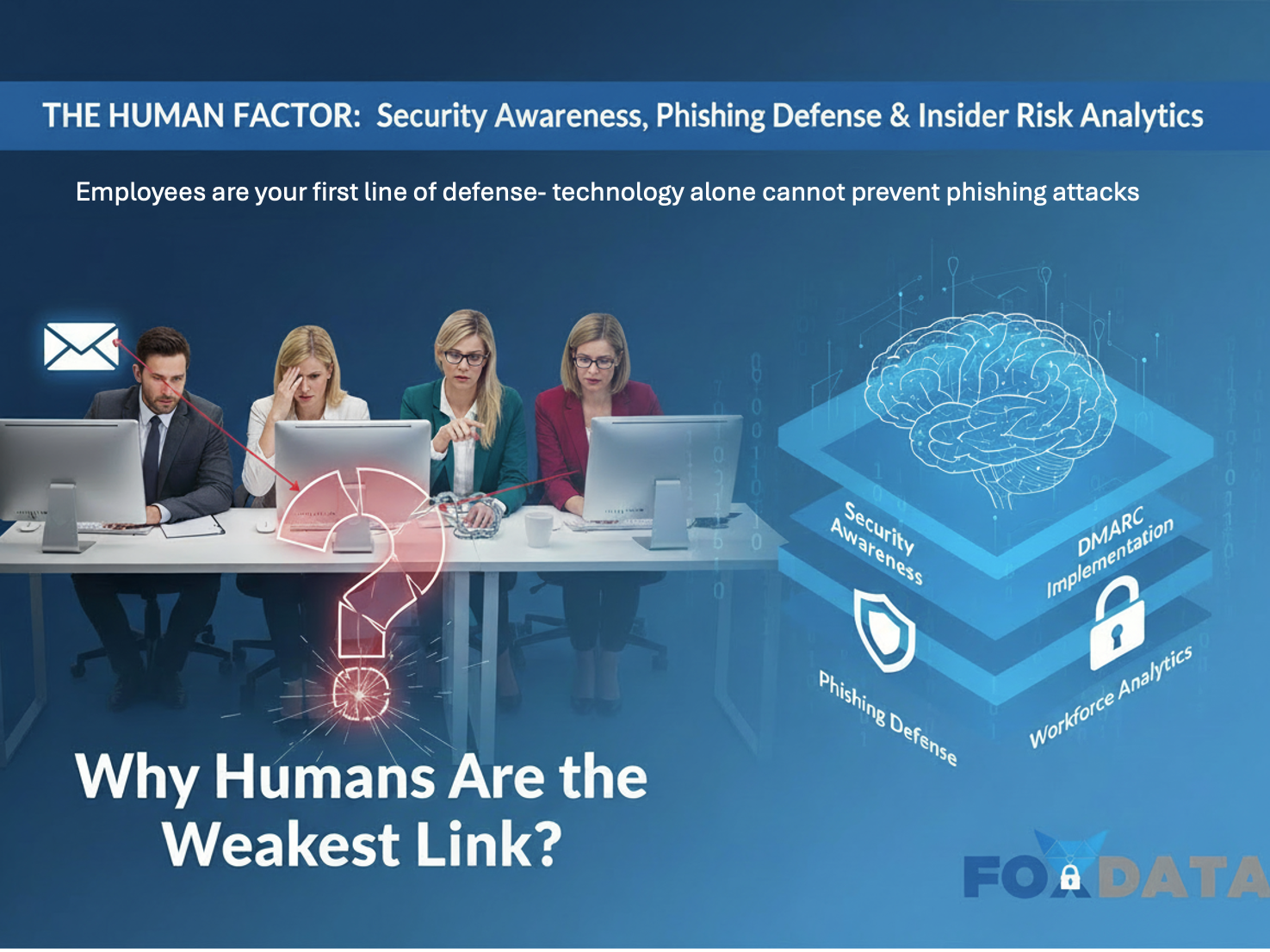
“Employees are your first line of defense—technology alone cannot prevent phishing attacks.”
Why Humans Are the Weakest Link
Despite advanced firewalls and endpoint protections, human error remains the leading cause of security breaches. From clicking malicious links to mishandling sensitive data, the human factor drives 85% of cyber incidents in the GCC.
Stat Highlight: According to a 2025 UAE cybersecurity report, over 70% of phishing attacks succeed due to lack of awareness among employees.
Cybercrime in the UAE has risen 25% in 2025, largely through human-targeted attacks. Key industries affected: Finance, Healthcare, and Retail.
60% of organizations report insider risk incidents, highlighting the need for proactive workforce monitoring.
Security Awareness Programs: Training Beyond Compliance
Key Points:
- Conduct regular phishing simulations to keep employees alert.
- Use role-based awareness programs tailored to departments.
- Measure effectiveness with knowledge retention and incident reporting metrics.
Phishing Defense: Protecting the Gateway
Phishing is evolving with sophisticated, targeted attacks. Technical measures, combined with human vigilance, reduce risk dramatically:
Tactical Measures:
- DMARC, SPF, DKIM implementation to secure email domains.
- Real-time threat intelligence feeds for suspicious URLs and attachments.
- Browser/email sandboxing to isolate potential phishing attempts.
Best Practices to Reduce Human Risk
Quick Checklist for Enterprises:
- Continuous security awareness programs
- Multi-layer phishing defences with DMARC
- Workforce analytics & behaviour monitoring
- Incident response drills for all employees
Cybersecurity is only as strong as your people. By combining training, technical controls, and behavioral analytics, organizations in the UAE and GCC can significantly reduce human risk and insider threats.